Wildly high falsettos; spoken sections; blatant plagiarism; and “guys attempting to operate musical instruments”
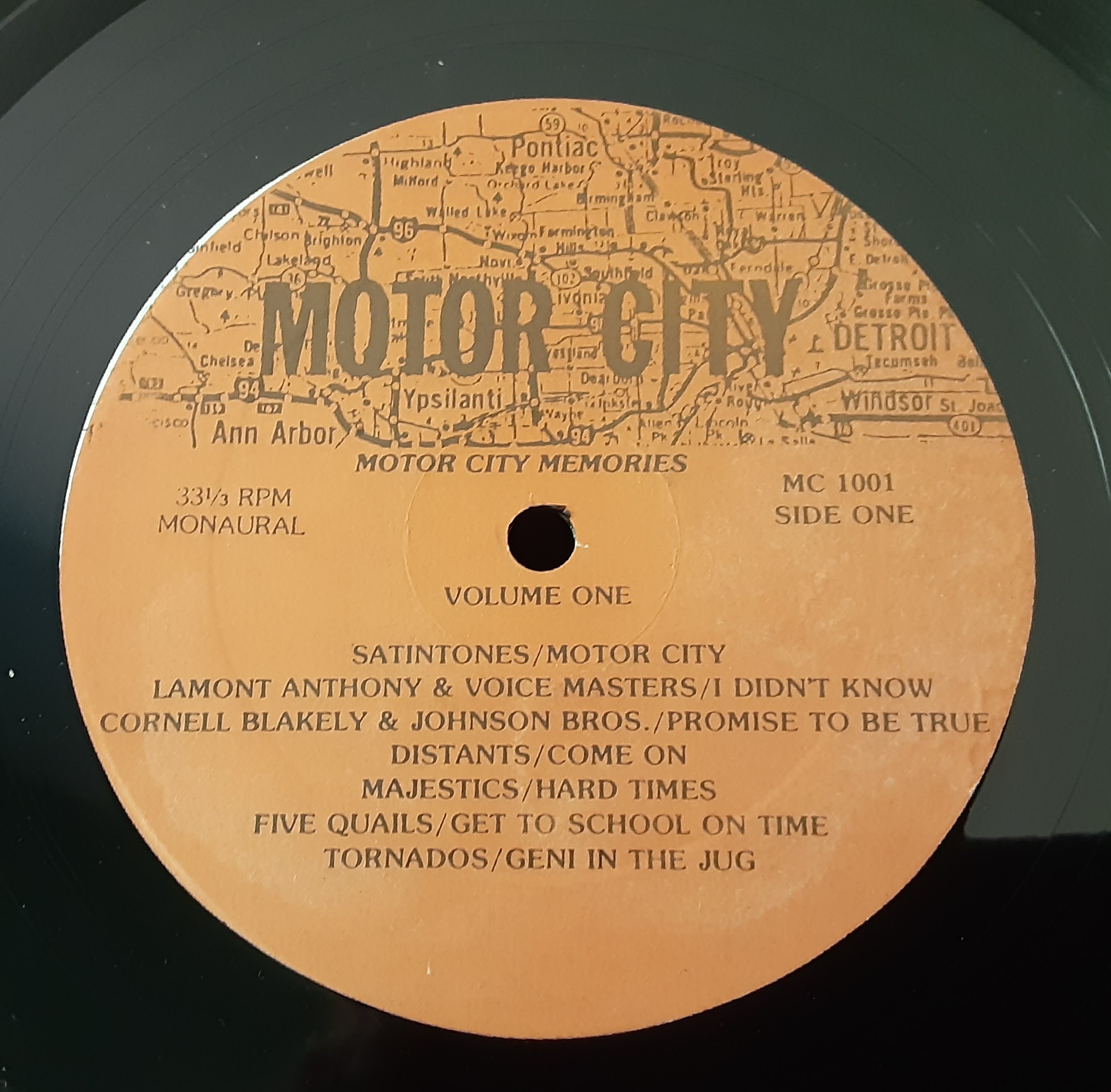
I recently was gifted a three-LP set, Motor City Memories, on the Motor City label, released sometime in the last few years. Each LP has 14 R&B songs by Detroit artists that predate the Motown era.
The LP’s come in plain white covers/sleeves/jackets. There is no identifying information on the records, except the catalog numbers (MC1001, MC1002, MC1003), label and record name, and artists/song titles. No songwriting credits, no BMI/ASCAP, etc.
The records are listed on Discogs and a few copies can be found on Ebay, but no additional information can be found there. Google searches yield nothing. According to public records, there are at least a half dozen businesses that have registered with the name Motor City Records, or some derivative thereof.
The record was purchased at Hello Records in Detroit, but they did not seem to know anything about the label.
Some of the groups will be familiar to most R&B fans (Nolan Strong and the Diablos, The Satintones) while some are likely the province of deeper students of the genre (The Larados, The Tornados, The Distants). A first listening revealed what I expected – this is true R&B, pre-shiny-Motown production.
I am an R&B fan, but not a serious collector. Put it this way: when Val Shively, the legendary R&B record seller in Upper Darby PA, looked over the counter and told me that I had to pay $30 for a 45 by The Vibrations, “My Girl Sloopy”, I gulped but bought it anyway. But that’s nothing – Val has a published list of over 2000 records that average around $200 each, including “You Could be My Love” by The 5 Crowns on the Old Town label for $4,000 (of course, it is on red wax).
So, as an R&B collector, I’m a piker.
But research on the artists on Vol. 1 became . . . well, the usual engrossing rabbit hole. So here are my findings on the gems on this record.
A few general comments:
- Almost all the groups on the record fulfill a couple of guidelines that Val listed in a short career memoir he gave me a copy of: (1) the name of the artist begins with “The”; and (2) there is a bass singer in the group.
- Many of the records have listed prices on either Val’s list, or Discogs, or elsewhere that are in the “collector’s item” range.
- Contained within the grooves of this record, you will find hallmarks of late 1950s R&B: wildly high falsettos; spoken sections; bells; gimmicky group vocal techniques; blatant plagiarism; and, as Frank Zappa once observed of R&B records, “guys attempting to operate musical instruments”.
Which is to say, these songs are a joy to listen to.
A few other notes before diving in:
- All of these songs can be listened to on YouTube, usually in the preferred format (an actual video of the 45 being spun).
- Here is a link to a playlist I created of all the songs on my YouTube channel – perfect accompaniment to the post!
- It is amazing how many record labels there were in Detroit at that time. A site dedicated to Detroit R&B labels (Sebear Studios) lists 36 labels (not including 30 that are Motown-related), and 9 of the ones here aren’t even on that site. The 14 cuts on this lp come from 12 different labels.
- And the sheer number of groups. There are at least 2,000 groups with entries on the simply named Doo Wop site; and again, four of the ones here didn’t even make that list.
- The x-degrees of separation rules apply here, though more like a crazed spider-web network. Many Motown greats (esp. on the song-writing, production and management side) appear on these records. So, for every David Ruffin, there are a half-dozen non-artist greats (Lamont Dozier, Berry Gordy, his sister Gwen, etc etc.)
- I would to thank several sites that were sources of information for this post in addition to ones already mentioned:
Here is a rundown on Side 1. (Side 2 to be covered in a subsequent post). Note that in some cases, the flip side of the song is actually the A-side.
Note that side 1 of the LP is all uptempo songs, while side 2 is ballads/slow songs. Where the 45 credits are different than indicated on the LP, I have included that information.
Track 1 – The Satintones – Motor City
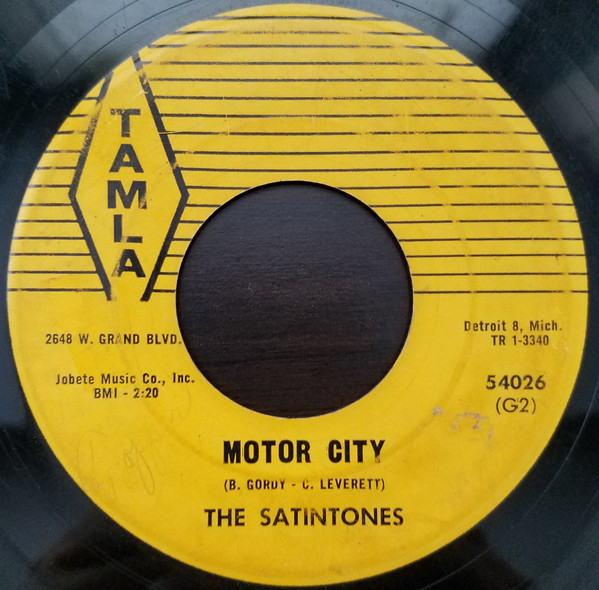
Label: Tamla – 54026
Date: 1959
Composition: B. Gordy and C. Leverett
B-side: Going to the Hop
- The Satintones were the first group to release a record for Motown (“My Beloved” b/w “Sugar Daddy” (Motown M 1000)).
- Personnel included Charles “Chico” Leverett, Sonny Sanders, James Ellis, and Robert Bateman.
- Bateman worked as a songwriter with Brian Holland, notably on a re-write of “Please Mr. Postman”, Motown’s first Billboard #1; and later collaborated with Sonny Sanders and Wilson Pickett on “If You Need Me” a hit for both Pickett and Solomon Burke.
- Sanders worked as an arranger on such hits as “Just Like Romeo and Juliet”, “Agent Double-O-Soul”, and “Higher and Higher”.
Listening Notes:
- Mellow-voiced, dark instrumentation.
- Detroit lyrics.
- Cha-cha beat, uptempo.
- Hit #7 on WJLB 1400 AM 1/2/60.
Track 2 – Lamont Anthony And Voice Masters – I Didn’t Know
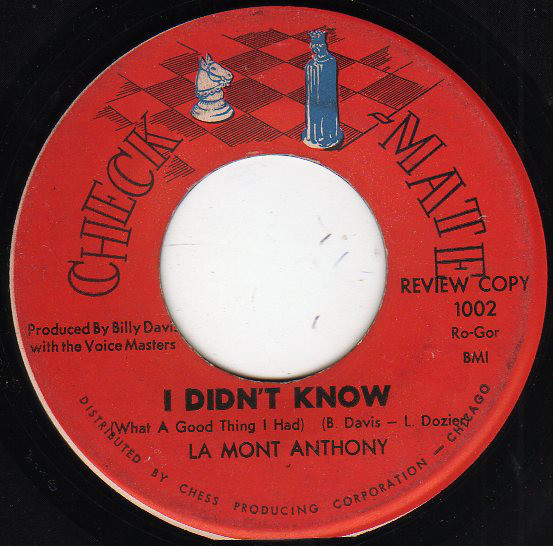
Label: Checkmate 1001 (credited to La Mont Anthony)
Date: 1961
Composition: B. Davis and L. Dozier
A Side: Just to be Loved (credited to Lamont Anthony with the Voice Masters)
- Lamont Anthony is Lamont Dozier of Holland/Dozier/Holland fame.
- Check-Mate was a subsidiary of the Chicago-based Chess label. This was the first record on the label.
- When the Anna label (run by Gwen Gordy and Billy Davis) was bought by Berry Gordy in April 1961, Gwen and Billy continued to sell Anna’s master tapes to Chess. Check-Mate started to release Detroit- area artists, and a number of Anna masters were released on Check-Mate during 1961 and 1962.
Listening notes:
- Strings reminscent of The Impressions or The Drifters
- Same beat as “Motor City”
- A bit like “Fortune Teller” (by Benny Spellman and others)
Track 3 – Cornell Blakely And Johnson Bros. – Promise To Be True
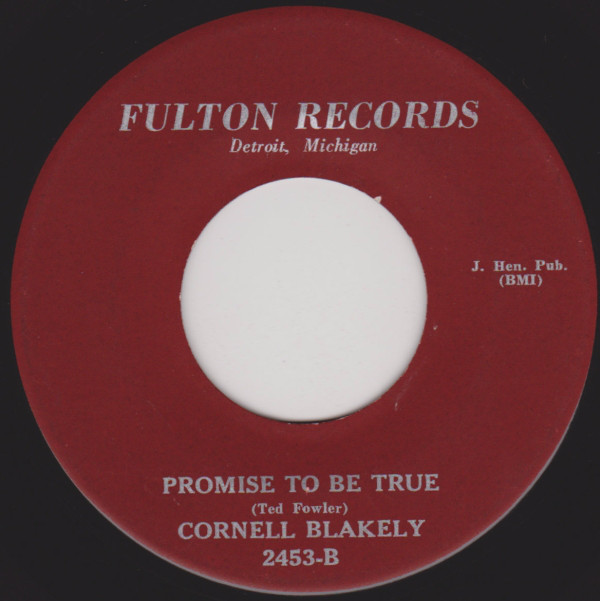
Label: Fulton 2543-B (Credited to Cornell Blakely)
Date: 1958
Composition: Ted Fowler
A side: Don’t Touch the Moon
- There is no mention of the Johnson Bros. on the Fulton record. A reissue not much later on Carrie out of Nashville lists “Johnson Bros. Background”.
- The Johnson Bros. recorded as The 5 Johnson Brothers and The Five J’s and also appeared on Fulton (see “My Darling” by The Five J’s on Side 2).
- From the Motown Junkies site:
- “’Bouncing’ Cornell Blakely was a Detroit gospel/R&B singer and later bandleader and DJ, who formed an association with songwriter James Hendrix in the late Fifties. Blakely had cut a few of Hendrix’ songs (and some of his own material too) for boutique labels like Fulton and Carrie before the pair of them crossed paths with Berry Gordy and Motown, as anyone on the Detroit scene was eventually bound to do, at the turn of the decade.”
- Cornell Blakely is in the Carolina Beach Music Hall of Fame. (Note for R&B neophytes: Beach Music has nothing to do with the west coast. It is a style of R&B that originated in the Carolinas and is known for an upbeat danceable sound, with a swing flavor, sometimes linked to a dance called The Carolina Shag. The Tams and Maurice Williams and the Zodiacs are noted Beach Music artists).
Listening Notes:
- Shuffle, piano-driven, blues
- More old-school R&B than cuts 1 and 2
- Best dancer so far
Track 4 – The Distants – Come On
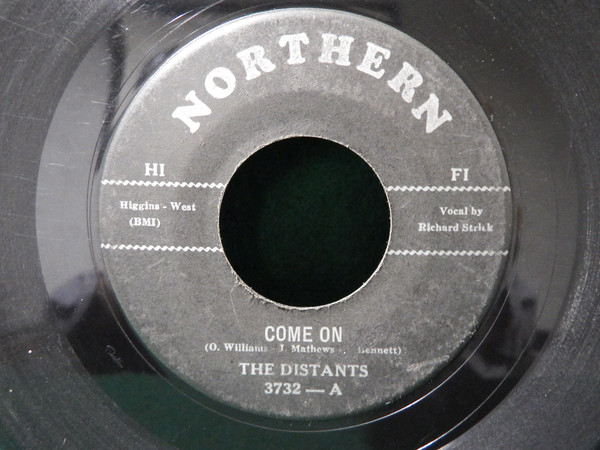
Label: Northern 3732 (Credited to The Distants – Vocal by Richard Strick)
Date: 1960
Composition: Williams/Matthews/Bennett
B side: Always
- Williams in the composition credits is Otis Williams (of Otis Williams and the Charms and The Temptations).
- Matthews is Johnnie Mae Matthews, known as the Godmother of Detroit Soul, and the founder of Northern Records. (see Discogs entry).
- Bennett was James Bennett, per Discogs, a producer and songwriter based in Jackson, Mississippi who recorded blues, gospel, and R&B acts for his LaJam Records, J&B Records, Traction Records, Retta’s Records, MT Records, Big Thigh Records, and “T” labels.
- Per PJDooWop:
- “This group features three of the original Temptations; Otis Williams, Elbridge Bryant and Melvin Franklin. Richard Street was also in this group, who later joined the Temptations in the 70’s. This record became a hit in Detroit but the group was cut loose by Johnny Mae shortly after its release.”
- From The Tempting Temptations FB page
- “Richard Street was an original member and lead singer of the group the Distants, which was largely an early Temptations Group. Other members included Elbridge Bryant, James “Pete” Crawford, Melvin Franklin, and Otis Williams.
- “Richard sang lead on the rocker “Come On”. It was a local hit at the beginning of 1960 due to copious amounts of airplay from WJLB jock “Frantic Ernie” Durham. It was soon picked up by Warwick records, which also released a follow-up disc that has Albert Harrell replacing James Crawford.
- “On “Come On” you can also hear Albert Williams and the female voices of The Andantes, a trio that became Motown’s key background singers and who sang on literally thousands of Detroit records. There’s also the legendary Funk Brother James Jamerson playing bass and future Temptation’s producer Norman Whitfield shaking his tambourine – which all contributes to a full sound that impressed Berry Gordy at Motown.”
- Richard Street sang with Tempations from 1971 until his death in 2013
Listening Notes:
- Eccentric falsetto background vocals
- One-two, one-two-three beat
- Bass lead in second verse
- Are there any other words?
- Female vocals in background
Track 5 – The Majestics – Hard Times
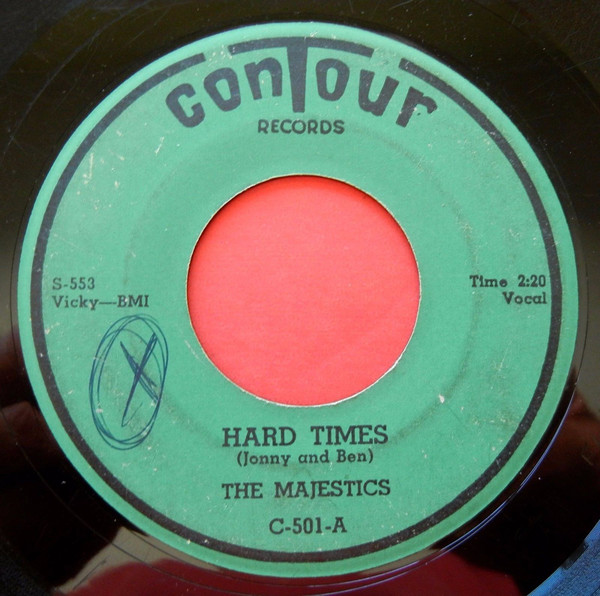
Label: Contour C-501-A
Date: 1959
Composition: Jonny and Ben
B side: Always
- Jonny is Johnny Mitchell, the lead singer on the cut. Ben is Ben Knight (bass singer for The Tornados below).
- $100 on ebay
- Per Detroit Soul Singles, Contour was owned by Robert West who also operated Flick & Bumble Bee b/w 1958-1959.
- Personnel: Johnny Mitchell (Lead), C. Autry “Breeze” Hatcher (First Tenor), Alvin English, Cyril Clark (Bass).
- Johnny Mitchell was one of The Freeman Brothers, a Motown duo active 1964-1970, along with orchestra leader Gerald Williams. The duo left Motown after their single “My Baby” (1965) failed to achieve commercial success and continued until the single “Sally Goes Up The Ladder” on Sprout in 1970.
- Johnny Mitchell was also a member of The Four Hollidays and The Monitors (the Majestics, renamed)
Listening Notes:
- Coasters-like
- Flip, comic vocals
- Like “Get a Job”, “Yakity Yak”, “Smokey Joe’s Café”
- Bass vocal at bridge
- Decent sax solo
Track 6 – The Five Quails – Get To School On Time
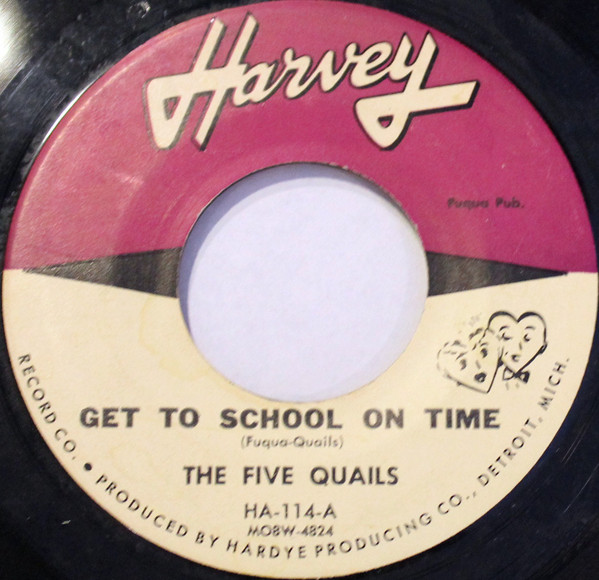
Label: Harvey HA-114-A
Date: 1962
Composition: Fuqua-Quails
B-Side: Been a Long Time
- Harvey Fuqua should require no introduction. He is an R&B/Soul Music legend, as a songwriter, singer, producer, and record label executive. He was a key figure in the development of Motown and was married to Berry Gordy’s sister Gwen (as if being the lead singer for The Moonglows was not enough to have cemented his name in any R&B hall of fame).
- Junior Walker and the All Stars played on this record.
- From All Music, via Doo Wop site:
- “The Harvey label was owned by Harvey Fuqua and Gwen Gordy Fuqua. It operated from 1961 through early 1963, when it was purchased by Berry Gordy.
- “Gwen Gordy was Berry’s older sister and a noted songwriter, label owner and developer of musical talent, with her own labels (Anna, Harvey) and with Gordy’s Motown and Tamla labels.
- “The Five Quails debuted on Mercury Records in 1957 and cut three singles on Harvey Records in the early ’60s.
- “Originally, they were The Five Stars formed at Kennard Junior High in the mid-’50s with William Fulgham (lead), Harold Sudberry (second lead), Donald Brown, James Williams, and Clarence Williams (no relation).”
Listening Notes:
- Coasters again
- Sounds like Charlie Brown, then name-checks “Charlie Brown”, “Slippin’ and Slidin'”.
- Fast gimmicky singing
Track 7 – The Tornados (6) – Geni In The Jug
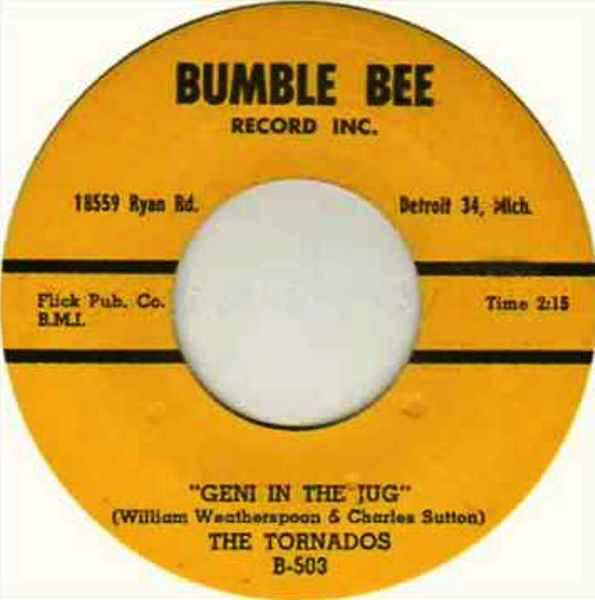
Label: Bumble Bee – B-503
Date: 1959
Composition: Charles Sutton, William Weatherspoon
B-Side: Love In Your Life
- Discogs list personnel as Charles Sutton, Ben Knight, Stanley Mitchell (lead), William Weatherspoon.
- Written by Charles Sutton and William Weatherspoon (group members)
- From Marv Goldberg’s site:
- “In 1959, the Tornados did some recording for Robert West, who owned a host of small Detroit labels (like Lu-Pine and Flick, on which he recorded the Falcons). This one was called Bumble Bee, and it had Charles’ old Royals/Midnighters buddy, Sonny Woods as a&r man. They cut at least two sides for West: “Love In Your Life” was a ballad with a beat, owing something to Clyde McPhatter and the Drifters, and a bit to the Impressions. It was penned by Charles and Robert Spencer, a baritone who was a utility fill-in for the Tornados whenever someone couldn’t appear. The flip was “Geni [sic] In The Jug,” in which the guy who rubs the lamp asks for a van so that he can bring Rock & Roll all over. It names various artists, and says “and don’t forget, we’ll be there too.”
- The Tornados Recorded a bunch of singles on Chess before this.
- $150 on Val’s site
- Charles Sutton was a founding member of The Royals who became the Midnighters, and was barred reentry into the group after an illness
- From Doo Wop Site
- “A hitch with Bob West in 1959 resulted in “Love in Your Life,” written by Sutton and sometimes-Tornado Robert Spencer, and “Geni [sic] in a Jug,” written by Sutton and Weatherspoon.
- “West had a family of labels that included Lupine, Flick, Kudo, Contour, and Bumblebee; the Tornados’ single came out on the latter. It seemed a natural move as West’s A&R Director was ex-Royal/Midnighter Sonny Woods, Sutton’s old road dog. But the Bumblebee deal only lasted one record.
- “They next recorded some sides for Winley Records, notably “Clap Your Hand and Skate,” written by Dave Clowney, bka Dave “Baby” Cortez, and Paul Winley, but neither it, nor the other sides ever saw the light of day and the Tornados disbanded.
- “Sutton attempted an unsuccessful songwriting career with Correct Tone Records.
- “Weatherspoon made a splash with Motown in the ’60s as a songwriter/producer, scoring mightily with Jimmy Ruffin via “What’s Become of the Brokenhearted,” co-written with James Dean and arranger Paul Riser. He also contributed to Holland-Dozier-Holland’s Invictus/Hot Wax labels in the ’70s. Mitchell and Knight blended into the nine to five world and were never heard from again.”
Listening Notes:
- More old-school R&B
- Name-checks Chuck Berry and other artists
- Reminiscent of The Dominoes with Clyde McPhatter
NEXT: Here is link to review of Side 2!
And possibly Vol’s 2 and 3.
 Joel E. Turner - Fiction and Other Things
WOW!! That is amazing!! So much information – and groups/folks I never even heard of!!! Way cool!!!
LikeLike
[…] For those who missed my post on Side 1, here is link: Motor City Memories Vol. 1 LP – Review and Guide. […]
LikeLike