Hammer Films. Let’s start there. Last summer a very film-literate friend observed my copy of Hammer Complete : The Films, the Personnel, the Company and ventured that perhaps it had something to do with the crime novels featuring Mike Hammer. Presumably, only the side binding was observed, as one would think the frontispiece would give the game away.
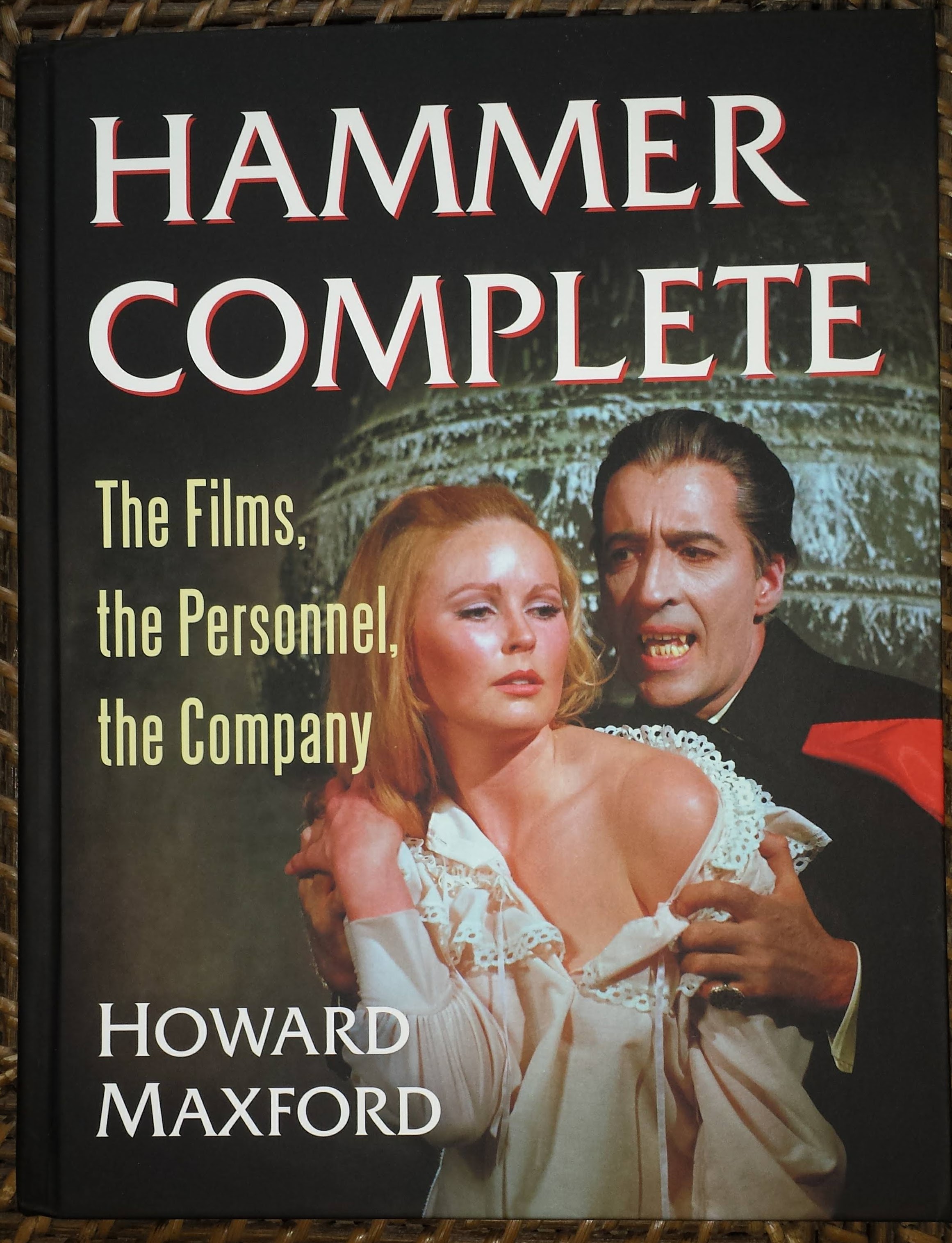
This made me mourn the state of our educational system. I will do my small part to remediate this failing.
Without getting into a potted history of Hammer Films, here is the short version for Horror neophytes. The first great era of horror films came out of Universal Studios in the 1930s, largely through the work of the producer Junior Laemmle, and included the black-and-white films featuring Frankenstein, Dracula, The Mummy, The Invisible Man etc, with its most famous stars being Boris Karloff and Bela Lugosi.
Beginning in the late 1950’s, Hammer Films began its recreation of essentially the same stories with The Curse of Frankenstein, followed shortly by The Horror of Dracula. These features were in Technicolor, and boy, did they use color to great effect in these blood-spattered epics. The core stars of the franchise were Christopher Lee, Peter Cushing, Michael Gough and any number of female actors in diaphanous gowns (The Horror of Dracula required the joint efforts of Melissa Stribling, Valerie Gaunt, Carol Marsh and Janina Faye to slake the thirst of the Count).
Christopher Frayling wrote in an article some years later that “[Horror of] Dracula introduced fangs, red contact lenses, décolletage, ready-prepared wooden stakes and – in the celebrated credits sequence – blood being spattered from off-screen over the Count’s coffin”.
It is a very different take from Bela’s white-tie-and-tails depiction. While Universal’s Dracula and Dracula’s Daughter had their sexual undertones, it’s all much more in the open with Hammer.
Where the tone of Universal’s Dracula is brooding, Hammer’s is shocking, with fangs, teeth-marks, very red blood, stakes and mallets being used professionally and disintegrating bodies. By modern standards, or even those of the slasher movies of the 1970s and 1980s, the Hammer classics are pretty low on the gore scale, but the overt pounding of a wooden stake into the ribcage delivers a satisfying jolt. It all may seem camp today, but they were playing for real horror in their time.
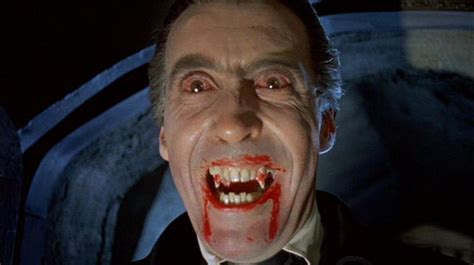
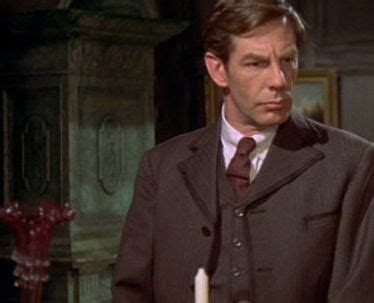
Lee is masterful and imposing (and tall). The hollow-cheeked, cerebral Cushing is well-cast as the methodical, but maniacal-when-needed good guy, and Michael Gough is just always a pleasure to see on the screen.
Here are Lee and Gough:
The plot has been changed from Stoker’s novel (and from the Universal film version) at the outset as Jonathan Harker has been changed from an estate agent sent to help Dracula plan his move to London, to a newly recruited personal librarian to Dracula who is a secret vampire hunter come to destroy Dracula.
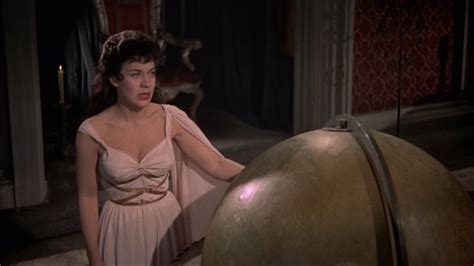
Harker, played by John Van Eyssen, who in his naivete reminds me of Zeppo Marx, quickly finds himself under siege by one of Dracula’s brides (Valerie Gaunt), suitably diaphonously garbed, who importunes him to help her escape, which is a ruse to get close and reveal her own fangs. Here is Ms. Gaunt before and after she goes after Harker’s neck.
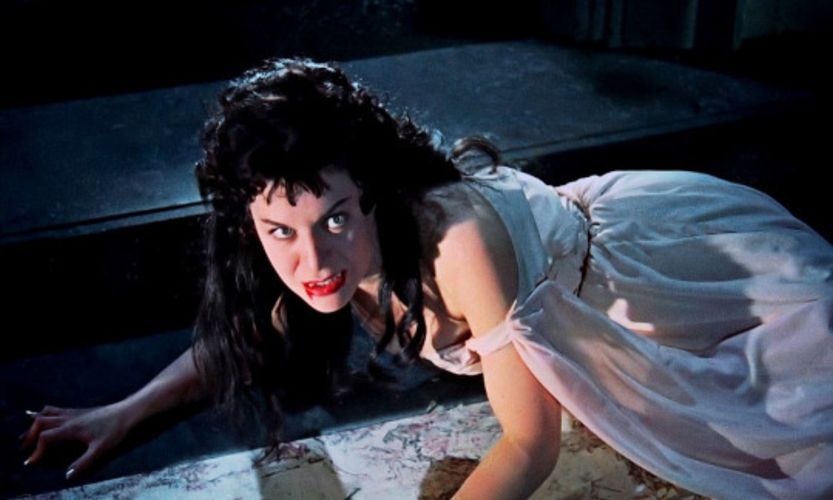
Harker comes out the loser in this confrontation and ends up in a coffin, transformed into a vampire. Soon, our real hero, Dr. Van Helsing arrives on the scene, a polymath doctor who is more up to the task of vampire hunting than Harker.
Van Helsing is played by the great Peter Cushing. I particularly enjoyed the scene where he dictates notes to himself that are being recorded on a gramophone, and walks about making precise little entries in a notebook while listening to the playback of his own voice.
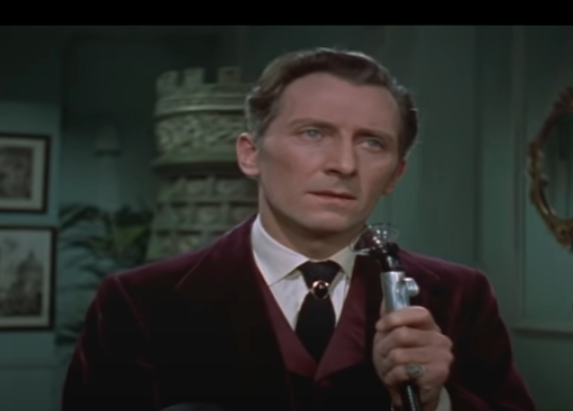
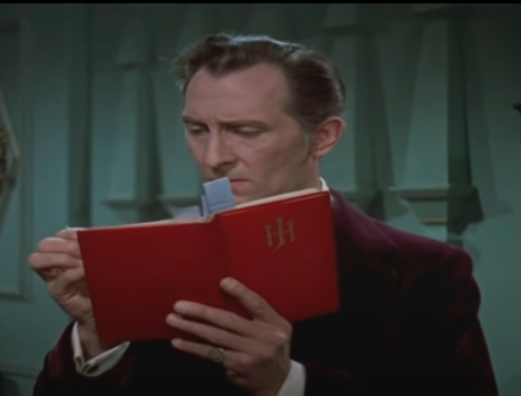
This is neat way of educating the audience on basic vampiric tenets:
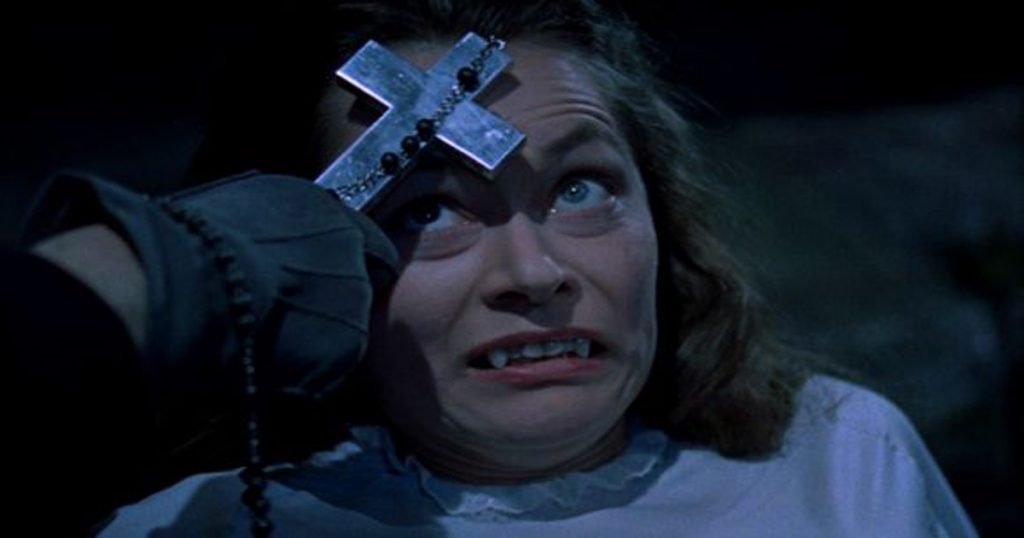
” . . . Light. The vampire allergic to light. Never ventures forth in the daytime. Sunlight fatal…repeat…fatal. Would destroy them . . . Garlic. Vampires repelled by odour of garlic . . . The crucifix, symbolizing the power of good over evil. The power of the crucifix in these cases…“
Here is an example of how to use the crucifix to afflict a vampiress:
Van Helsing does battle with the various vampiric denizens of the castle and is called to his final confrontation with Dracula when a maid at the house he has sought refuge in conveniently recalls an instruction she received from Mina, the lady of the house, who has come under Dracula’s influence: “Madame told me the other day that I must on no account go down to the cellar”.
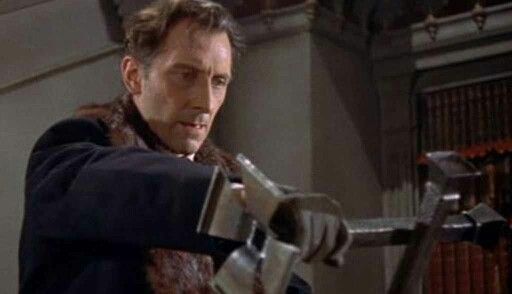
Van Helsing rushes to the cellar, where he finds Dracula’s coffin. Dracula has fled with Mina to his castle, and a battle royal ensues there where Van Helsing pulls out all the stops, including using a cross improvised from two candlesticks to send Dracula to his final disintegration.
True Hammer buffs will know that Horror of Dracula was the work of writer Jimmy Sangster and director Terence Fisher, who were responsible for many great features for the studio.
The film was released as Dracula in the UK, and as Horror of Dracula in the US. It was a huge success and Universal-International, which had distributed the film, gave Hammer its blessing via the rights to remake their entire library of classic films.
Which leads us to our next entry: Hammer Films production of The Mummy.
 Joel E. Turner - Fiction and Other Things
I remember watching Chris
LikeLike