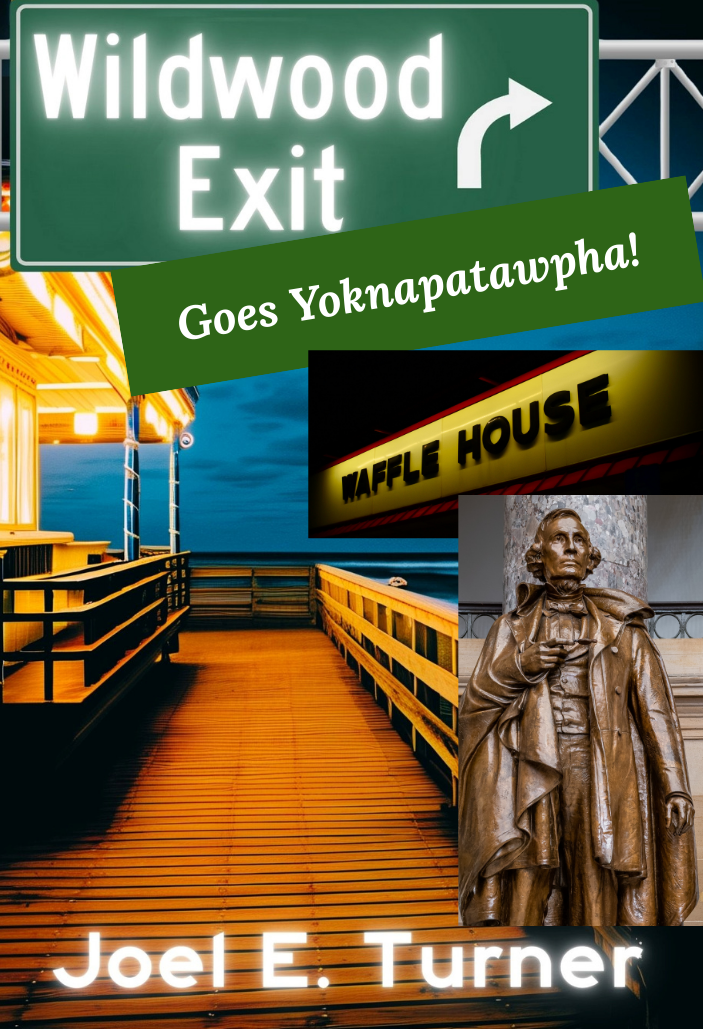
Wildwood Exit Goes Yoknapatawpha!

Regular readers will know that earlier this year I published a novel, Wildwood Exit, which is a noir/crime tale set at the New Jersey Shore (Wildwood and Cape May).

I reproduce here in its entirety a review of the novel that appeared in several venues online:

Continue reading

Excerpt from BRENDA’s GREEN NOTE (a novel)

An excerpt from my (unpublished) novel, BRENDA’S GREEN NOTE, is featured in the August 2024 edition of The Write Launch => BRENDA’S GREEN NOTE: EXCERPT.

BRENDA’S GREEN NOTE follows a young woman with synesthesia who harnesses her ability to see sounds as colors to become a key player in the vibrant music scene of the 1960s in Philadelphia.

At age eight, Brenda Canavan realizes that nobody else sees a C# as a pulsating green blob. As a teenager, she is taken under the wing of an avant-garde instructor/composer, who brings her into his world of mind-blowing electronic music installations. Brenda soon makes the leap to working the sound board for rock shows, where her sound/color synesthesia becomes an asset, no longer an aberration that she hides. She fixes equipment, sorts out freaked-out would-be rock stars, befriends a few groupies and even punches out an irritating band manager—while becoming the favorite of a domineering local promoter who recognizes her talents.

When Brenda experiences a severe shock from a balky fuse box, her synesthesia vanishes. Within weeks, her father dies and Brenda descends into a deep depression. Unsure when or if her gift will return, Brenda is forced to find a new path to fulfillment, in a world that has been drained of the color that so animated her spirit.

Enjoy!

And….

IF YOU ENJOYED THIS CONTENT, PLEASE HIT THE SUBSCRIBE BUTTON BELOW TO BE NOTIFIED OF FUTURE POSTS!

Myles na Gopaleen on Joycean Punctuation

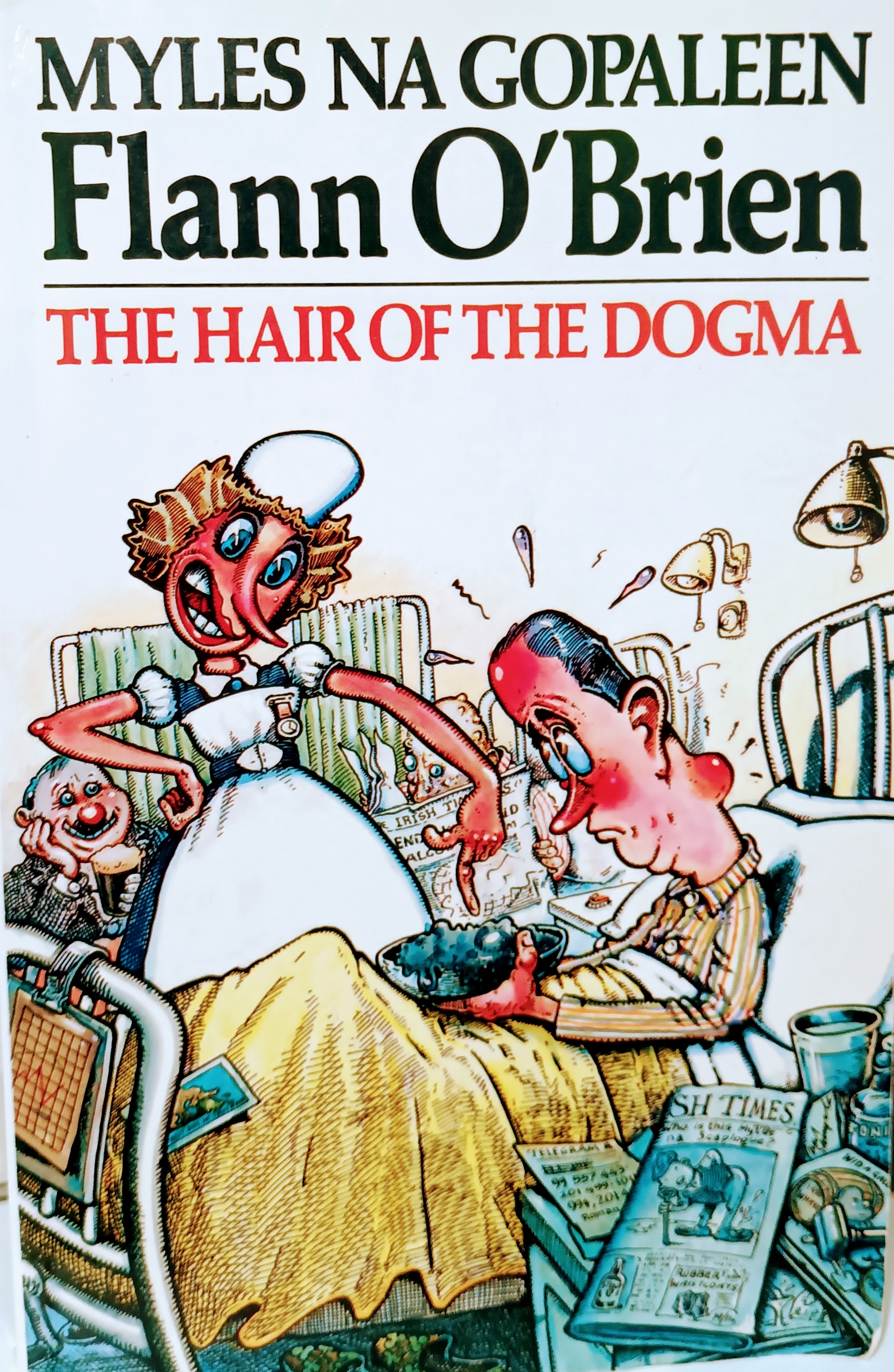
Myles na Gopaleen (Flann O’Brien) often spoke of Joyce in the Cruiskeen Lawn pieces he penned for the Irish Times from 1940 through the late 1950s. In one titled “J.J. and Us”, collected in The Hair of the Dogma, he bemoans the recent Penguin edition of Dubliners (ca 1956), which repeatedly refers to Finnegan’s Wake; the inclusion of the apostrophe he puts down to “negligence or ignorance”.

This mispunctuation really got under Myles’ skin, as evidenced by another column wherein he blasted an article in The Bell that consistently used the erroneous apostrophe: “That apostrophe (I happen to know) hastened Mr Joyce’s end. To be insensitive to what is integral is, I fear, not among the first qualifications for writing an article on Mr Joyce”. (The Best of Myles, Penguin Edition, p. 239).

Take that, you inserter of inappropriate apostrophes!

In “J.J. and Us”, Myles reserves stronger words for a misplaced comma in the story “Ivy Day in the Committee Room”, as rendered in the same benighted Penguin edition of Dubliners:

“But what words have we for this thing, on p. 128?:

Mr Lyons sat on the edge of the table, pushed his hat towards the nape of his neck and began to swing his legs.

‘Which is my bottle? he asked.

‘This, lad,” said Mr Henchy.”

“That comma after ‘this’ – have we a word for it? Yes: BLASPHEMY”


I checked a copy I have (Modern Library, 1969) and the comma was in its rightful place. This edition had corrected text by Robert Scholes in consultation with Richard Ellman, who would be the right boyos, as Myles might say. Whether Penguin originated this error, I will leave to folks who have studied all that.

O’Brien was a great admirer of Joyce and spun out fancies in his column that he and Joyce were in the same drinking circle (impossible as they were twenty years apart in age and Joyce was long gone from Dublin by the time O’Brien was getting plastered at the Scotch House), a circle that seems to have only existed within Joyce’s own texts.

When the Scotch House, O’Brien’s unofficial office to which he would repair (in Joyce’s Uncle Charles fashion) when his bureaucratic duties of the day were done (early, as I understand it), was to be sold, O’Brien (Myles, that is) unleashed a torrent of nostalgia in a Cruiskeen Lawn piece (“Black Friday”, also in The Hair of the Dogma) that is straight out of the world of “Counterparts”, a story in Dubliners, where he styles Joyce as the character O’Halloran. :

“There we were in a lump, all in strong body-coats, myself in the lead – Henry James, Bernard (‘Barney’) Kiernan, Hamar Greenwood, Meflfort Dalton, the Bird Flanagan, Jimmy Joyce, Harvey Duclos and MacCredy the cyclist, all heading into the Scotch House for hot tailers of malt, with a clove apiece thrun in to take the smell off our breaths. I remember cuffing a young fellow selling flags in connection with some ‘rag’ and being reminded by Joyce (who at the time called himself ‘O’Halloran’) that the da, Gogarty, was an important man.”

A bit later in the column, Myles quotes “Counterparts” verbatim and insists that he is Farrington, the clerk at the center of the story, who, in Joyce’s words is wed to a “a little sharp-faced woman who bullied her husband when he was sober and was bullied by him when he was drunk.”

Myles variously defended, satirized and lied about Joyce (claiming he had met him on various occasions, all apparently untrue). He even included him as a character in The Dalkey Archive though, to my taste anyway, there was little bite or humor in it, his talents by then flagging.

Anthony Cronin, in his excellent biography (No Laughing Matter: The Life and Times of Flann O’Brien), notes that “The figure of Joyce hung over his life like a sort of cloud from which the apocalyptic vision could come or had come. Like all revelations, it was resisted, distorted and, in part, rejected; but there was no disguising the fact that it had been vouchsafed”.
The Sopranos on Writing

I’ve been reading Woke Up This Morning: The Definitive Oral History of the Sopranos by Michael Imperioli (Christopher Moltisanti on the show) and Steve Schirripa (Bobby Bacala) with Philip Lerman. The book was born out of the podcast Talking Sopranos hosted by Michael and Steve, and features interviews with many actors, writers, producers, directors and other crew members from the series.

Continue reading

Three Jobs Should be Enough

A story about working . . .

Author's avatarLit Bits

By: Joel E. Turner

Three jobs should be
enough, I mean none of them is what you’d really call a job, not
like when I was clocking in at the refractory plant, lifting heavy
shit to make bricks, running a hydraulic press. Before I got that lay
off letter from headquarters – Moon Township Pennsylvania, can’t
make that up. Bring you back if there is sufficient demand. Being an
A-rated tech don’t mean shit, I guess.

Better off out of
there anyway, I seen old guys at the Eagle Lodge coughing out their
life from the asbestos after twenty years. They say it ain’t like
that anymore, but still.

The lady at the
coffee joint, she’s alright, tad on the nervous side. Laughed my
ass off when that buzzer for the drive-through went off, she jumped a
mile, bent over trying to figure out the damn spresso machine. Niece
left…

View original post 1,960 more words

Desert Schools, WASP’S, William S. Burroughs, and the Atomic Bomb

In Tucson recently, I had dinner at Hacienda del Sol, a “guest ranch resort” or “luxurious Arizona dude ranch”, depending on who’s talking. The resort has an assortment of rooms, casitas, spas, etc. and has beautiful views of the Catalina Mountains:

Hacienda 1Hacienda 2

Continue reading

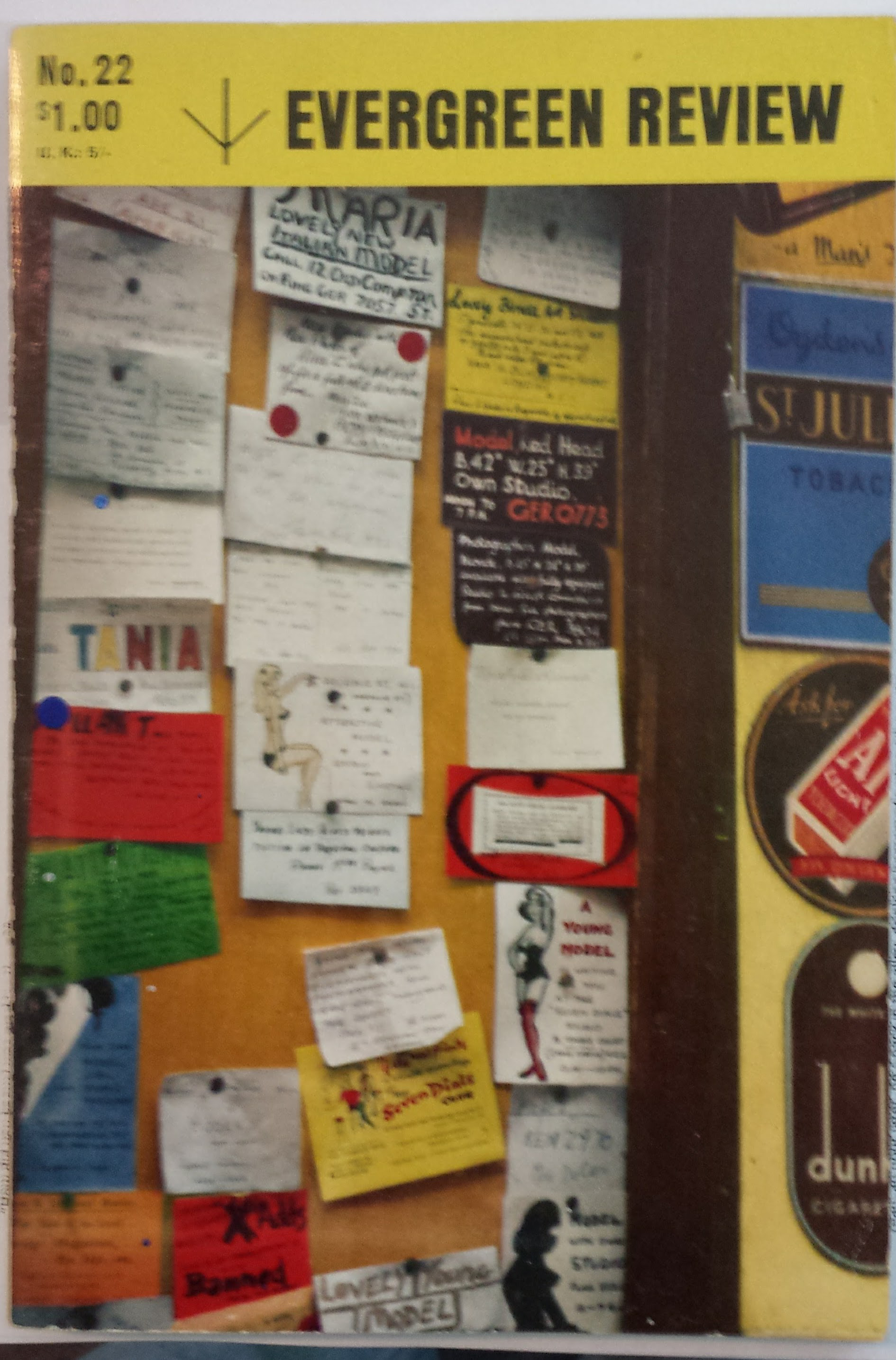
Mysteries in Evergreen Review #22 (1962)

Newaygo is a town in rural western Michigan where you can buy t-shirts that say “Newaygo – a drinking town with a fishing problem”. It’s a small old-fashioned town on the Muskegon River that does a lot of trade with folks engaged in outdoor recreation – tubing, kayaking, fishing, hunting, hiking – or just hanging out in the North Woods and drinking beer. It is a great place but not exactly Greenwich Village.

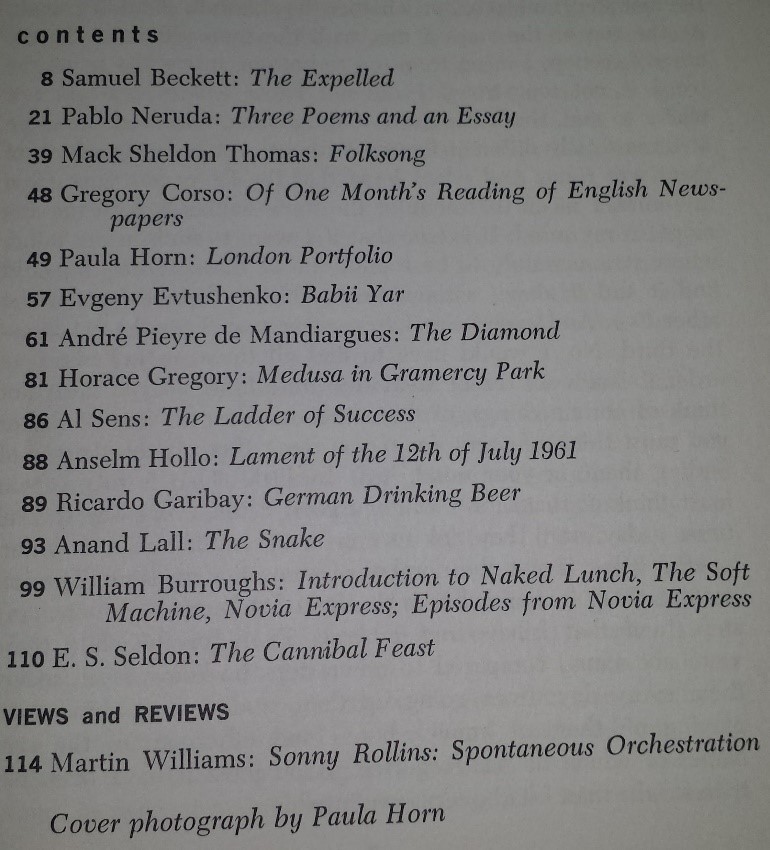
So, it was surprising to go into a bookstore in Newaygo and find a cache of issues of the Evergreen Review. I purchased this particular issue on the basis of its table of contents:

ev cover       Ev toc Continue reading

JET Research Bureau – Note #232: Flying BOAC in 1961

JET Research Bureau – Note #232

I needed information on air travel back and forth between Philadelphia and London in 1961 for a novel I was working on. Some sources suggested Pan Am flew non-stop on this route back then, but details on  this were hard to find. However, I determined that British Overseas Airways Corporation (BOAC) flew regularly from New York to London back then, which would be an easy connection from Philadelphia. I needed enough detail on this to be sure I didn’t have any howlers in the story.

Details, I found. Continue reading